Collagen for gut health is one of the biggest supplement trends right now but when you dig into the actual research, the picture is very different from what social media would have you believe. As a dietitian, here’s what I think you need to know.
Every time I open Instagram I see it. Another influencer crediting collagen for healing their gut, eliminating their bloating, or solving their digestive issues. The collagen supplement market is now worth roughly $2 billion per year, and a huge portion of that is driven by people buying it specifically for gut health.
I understand the appeal. The logic sounds reasonable on the surface. But when I actually look at the published science on collagen for gut health — and compare it to what we know about prebiotic fiber — I come to a very different conclusion than most of what you’ll read online.
So let’s talk about it. No hype, no product-first thinking. Just the research.
What Is Collagen and Why Do People Use It for Gut Health?
Collagen is the most abundant protein in the human body. It’s found in your skin, joints, bones, and connective tissues including throughout your digestive tract, where it helps provide structural integrity to the gut wall.
That’s the foundation of the collagen-for-gut-health argument: if collagen is part of the gut’s structure, and your gut is damaged or leaky, wouldn’t supplementing with collagen help repair it?
It’s intuitive. And there are two specific mechanisms that proponents point to:
- Collagen peptides might directly protect the seal between gut cells, helping to maintain what’s called the gut barrier.
- Collagen is rich in glycine, an amino acid that some researchers believe can support gut integrity on its own.
Glycine is worth a separate conversation and you can buy it as a standalone supplement for a fraction of the cost of collagen. But today, we’re focused specifically on collagen peptides and what the evidence actually says about them for gut health.
The appeal is real. The question is whether the evidence matches it.
What Does the Research Actually Say About Collagen for Gut Health?
There is interesting research on collagen specifically for skin improvements that you can read about in the 2023 meta-analysis. However, when you search for human clinical trials testing collagen for gut health, there aren’t many.
Human Clinical Trials
The most commonly cited study is by Abrahams and colleagues, published in 2022. They gave 20 grams of collagen peptides per day to 14 women for 8 weeks and reported a 31% reduction in bloating.
However, in this study there was no placebo group. The improvements could be entirely explained by the placebo effect, which is particularly powerful in gut health research. On top of that, the study involved only 14 participants, used double the dose most people take, and was funded by one of the world’s largest collagen manufacturers.
The next human trial study by Taylor and colleagues in 2023, used a more rigorous crossover design. They gave collagen to 20 athletes before intense running. The result: no significant effect on GI symptoms or gut integrity markers. This study was also industry-funded.
That’s the complete body of human evidence on collagen for gut health: two small studies, one positive without a placebo, one null, both funded by industry. There are no meta-analyses. No systematic reviews. No large-scale independent trials.
For something that tens of millions of people are taking specifically for their gut, that’s a remarkably thin foundation.
Animal and Lab Studies
There are some mechanistic studies worth looking at. The most-cited study is Chen and colleagues (2017), published in the journal Food and Function. They applied fish-derived collagen peptides to intestinal cells in a dish and found the peptides helped protect the gut barrier from breaking down under inflammatory conditions. Promising, but this was in a petri dish, not a human body.
A more recent study in Nature in 2025 is also becoming more cited for showing anti-inflammatory effects in vitro (test tube). But this type of research doesn’t always translate to human studies.
A 2022 study published in Frontiers in Nutrition found that collagen peptides actually worsened colitis in mice. Giving collagen to mice with an already-inflamed colon made the inflammation worse, not better.
The critical finding with this was context and timing. If cells were exposed to collagen before inflammation, it was protective. But if inflammation was already present, collagen made things worse.
The bottom line here is that we don’t really have a clear understanding yet about if and what context collagen supplementation could help with and in some instances this could add to the risk for someone.
Collagen & Your Gut Microbiome
Here’s a part of the collagen conversation that almost nobody is having — and it matters.
Collagen is a protein. When you take collagen supplements, the peptides are partially absorbed in the small intestine. But unabsorbed protein — especially at the high, concentrated doses typical of supplements — reaches the colon, where your gut bacteria get to work on it.
You’ve probably heard about fiber fermentation: gut bacteria break down fiber and produce short-chain fatty acids (SCFAs) like butyrate, propionate, and acetate. These molecules are genuinely beneficial for gut health in well-documented ways.
Protein fermentation is an entirely different process — and not a good one.
When bacteria ferment protein, they produce branched-chain fatty acids, which don’t carry the same benefits as SCFAs. But more concerning are the toxic byproducts that come along with them:
- Ammonia — directly damages the gut lining and weakens the gut barrier
- Hydrogen sulfide — causes DNA damage to colon cells and has been implicated in colorectal cancer development
- Phenols and p-cresol — additional harmful compounds associated with gut inflammation
When protein fermentation dominates over fiber fermentation in the colon, that metabolic shift is associated with less healthy microbial communities. You end up with less butyrate, less propionate, less acetate — and more of those toxic byproducts.
This matters even more when you consider that most Americans are already eating a high-protein, low-fiber diet. Adding high-dose collagen supplementation on top of that could be pushing the microbiome further in the wrong direction — not the right one.
Collagen isn’t inherently problematic. But at high doses and in the absence of sufficient fiber, it’s not a neutral choice for your gut either.
How Prebiotic Fiber Protects the Gut Barrier
Now let’s talk about what your gut barrier actually needs — and how prebiotic fiber delivers it.
Your gut barrier is a single layer of cells roughly 20 to 25 feet long, with a surface area about the size of a small apartment. Every cell matters. This barrier determines what gets absorbed into your body and what doesn’t. When it works properly, your immune system stays calm. When it’s compromised, bacterial fragments called lipopolysaccharide (LPS) leak into your bloodstream and trigger systemic inflammation — a process increasingly linked to everything from metabolic disease to autoimmunity.
Unlike collagen for gut health where the mechanisms are theoretical or poorly established- prebiotic fiber protects the gut barrier through four distinct, well-characterized mechanisms. Let me walk you through each one.
1. The Mucus Layer
Think of your gut’s mucus layer protects your gut. Think of it as as a moat surrounding a castle. It’s filled with thick, viscous slime that creates a physical barrier between the bacteria in your gut and the actual gut wall. Most bacteria can’t easily penetrate it, and that’s exactly the point.
Butyrate is a short-chain fatty acid produced when gut bacteria ferment fiber and it is the primary driver of mucus production. When you don’t have enough fiber in your diet, your gut bacteria run low on their preferred fuel and start consuming the mucus layer itself. The moat dries up. The bacteria get closer to the wall.
Fiber keeps the moat full.
2. Colonocytes
The cells lining your colon are called colonocytes, and they’re like the bricks in the castle wall. Here’s something remarkable: your gut lining renews itself completely every 3 to 5 days. That means your gut wall is under constant construction, every second of every day, for your entire life.
Colonocytes get approximately 70 to 80% of their energy from butyrate. That’s not a rounding estimate — that’s their primary fuel source. Without enough butyrate coming in through fiber fermentation, these cells don’t have the energy they need to function and renew properly. The bricks start to crumble.
3. Tight Junctions
Bricks alone don’t make a wall. You need mortar to hold them together. In the gut, that mortar is a set of proteins called tight junctions, which seal the gaps between neighboring cells and prevent things from passing through that shouldn’t.
When tight junctions break down, you get increased intestinal permeability — what many people call “leaky gut.” And once again, butyrate is central to the solution. A landmark 2020 study published in PNAS showed precisely how butyrate organizes the molecular scaffolding that assembles and stabilizes tight junction proteins. This isn’t a vague association — it’s a characterized molecular mechanism.
4. GLP-2: Our Repair Crew
Every castle needs a repair crew, and your gut has one: a hormone called GLP-2. (Not to be confused with GLP-1, the hormone behind medications like Ozempic, though they are related.)
When your gut microbes ferment fiber and produce short-chain fatty acids, those molecules activate specialized cells in the gut lining that release GLP-2. This hormone then stimulates the growth of new intestinal cells and strengthens the tight junctions which essentially are sending in the construction crew to reinforce the castle wall.
This pathway is so well-established that a synthetic version of GLP-2, the drug teduglutide, is FDA-approved to treat short bowel syndrome. That’s a pharmaceutical drug built on the exact same mechanism that fiber activates naturally through the microbiome.
Here’s the thread that ties all four of these mechanisms together: every single one depends on short-chain fatty acids. And the primary way your body generates SCFAs is through fiber fermentation by your gut microbiome.
Without butyrate, the moat dries up, the bricks weaken, the cement cracks, and the repair crew doesn’t show up. Prebiotic fiber isn’t just feeding you — it’s feeding the microbes that maintain the entire system.
The Evidence Behind Prebiotic Fiber Is Vastly Stronger
This isn’t theoretical. The evidence base for prebiotic fiber and gut health is substantial, consistent, and includes some of the largest studies ever conducted in nutritional science.
A landmark systematic review and meta-analysis published in The Lancet drew on data from 185 prospective studies and 58 clinical trials, covering nearly 135 million person-years of data. The findings were striking: people who consumed the most dietary fiber had a 15 to 30% lower risk of dying from all causes, and a 16 to 24% reduction in rates of heart disease, stroke, type 2 diabetes, and colorectal cancer.
For gut barrier health specifically, a 2025 meta-analysis of 16 randomized controlled trials involving nearly 800 participants found that prebiotic supplementation significantly reduced circulating LPS, the bacterial toxin that enters the bloodstream through a damaged gut barrier. The effect size was large, considerably larger than what was observed with probiotics. The certainty of evidence was graded as high.
Compare that to the evidence on collagen for gut health: two small studies, no placebo control in the positive one, both industry-funded, no systematic reviews, no meta-analyses.
What Prebiotic Fiber Does to the Microbiome
Here is what we know prebiotic fibers can do to support gut health and why I’d recommend them over collagen when it comes to gut health.
Over 15-30 days with a consistent daily dosing this is what happens:
Short-chain fatty Acids Rise – Acetate, propionate, and butyrate all increased steadily even with the dose staying the same. What’s interesting is that our microbiome adapts and becomes more efficient at fermenting fiber. These benefit continue to extends to all fibers consumed. And as the microbiome improves – your tolerance continues to improve. This is why we developed our RAINBOW® method – built on the science of low and slow progression towards an expanded diet.
Ammonia levels dropped. With prebiotic consumption, overtime you can see ammonia levels also drop. This is a direct signal of a metabolic shift away from protein fermentation and toward fiber fermentation. It’s exactly where you want the microbiome to be.
Inflammatory markers shif significantly: In studies that look at prebiotic consumption you can see markers like TNF-alpha (a key pro-inflammatory cytokine) drop and anti-inflammatory markers like IL-10 (an anti-inflammatory marker) rise.
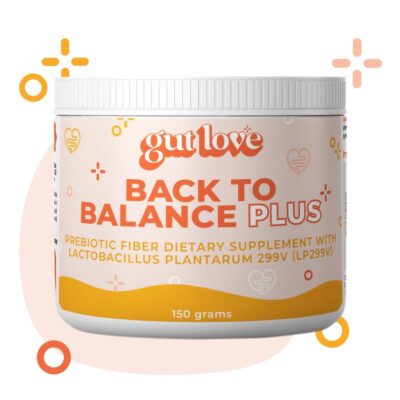
The microbial community changes: Depending on which prebiotic is used you can see a rise in different types of helpful gut bacteria and a decrease in the gut bacteria that we don’t want to be high like bilophila wadsworthia – a hydrogen sulfide-producing bacterium linked to gut inflammation. With the ingredients in Back to Balance Plus – you can see an increase in Bifidobacteria and Lactobacillus – two of the most well studied helpful gut bacteria. There are also many other helpful prebiotics as well on the market that can be used.
These are the exact changes the mechanisms predict. Rising SCFAs, falling ammonia, reduced inflammation, a microbiome shifting toward fiber fermentation and away from protein fermentation. This is what it looks like when the gut has what it actually needs.
How long does it take to see improvements?
The term prebiotic can mean a lot of different things. You can get prebiotics from colorful foods and you can also get specific, targeted prebiotics from supplemental sources like psyllium, sunfiber, acacia, baobab and more.
Some prebiotics contain a prebiotic and a probiotic like Back to Balance Plus (B2B+). A lot of people ask about how long it takes to see gut health changes with prebiotics – here is a breakdown for B2B+.
1 week
At just 1 week of intake of the strain in B2B™, 70% of the participants reported significant pain relief.
30 days
In a 30-day study on the strain used in B2B™, there were reductions in both the severity and frequency of pain. After 30 days, there was complete resolution in abdominal pain. There was also a trend towards normalization of stool frequency. Improvements in IBS symptoms was seen in 95% of patients compared to only 15% in the placebo group.
4-6 weeks
At 4-6 weeks – alleviation of constipation and improvements in bowel movement frequency are seen with the prebiotic in B2B™. Reductions in diarrhea using our B2B™ were seen at 4-6 weeks.
6-12 weeks
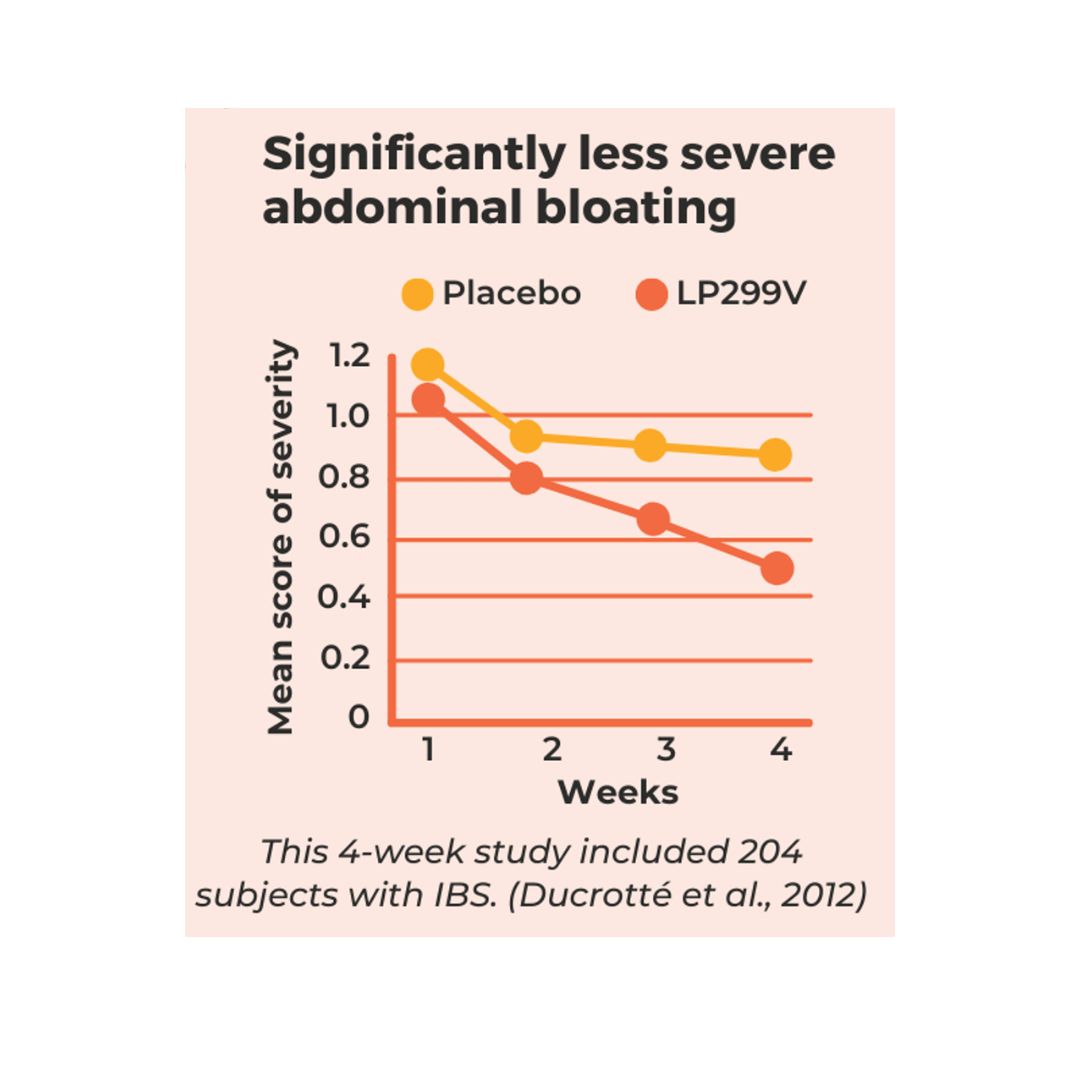
At 4-12 weeks of use – the prebiotic in B2B™ helps encourage the growth of lactobacillus, bifidobacteria in the gut and helps encourage butyrate production. After 12 weeks of use, there were significant improvements seen in abdominal pain, gas, bloating, diarrhea and constipation.
Collagen for Gut Health vs. Prebiotic Fiber — A Side-by-Side Comparison
| Collagen for Gut Health | Prebiotic Fiber | |
| Human trials | 2 small, industry-funded studies | Multiple large RCTs + meta-analyses |
| Mechanisms | Theoretical / poorly established | 4 well-characterized mechanisms |
| Gut microbiome impact | May worsen dysbiosis via protein fermentation | Increases SCFAs, improves microbial composition |
| Inflammation | May worsen with existing inflammation (mouse data) | Significantly reduces LPS and inflammatory markers |
| Evidence quality | Thin | Robust — high certainty |
| Independent research | None | Extensive |
The Bottom Line & Why I’d Put a Prebiotic in My Coffee over Collagen
To be fair to collagen- it genuinely may have value in other contexts outside of gut health. The research on skin elasticity and joint support is a different conversation, and I’m not dismissing it. But if you are going to have it – consider pairing it with a prebiotic from a food or supplement source.
The gut barrier runs on short-chain fatty acids. That’s its fuel. And the best way to generate those SCFAs is by feeding your gut microbes the fiber they’re designed to ferment.
P.S. If you liked this one… you need to check this out:









0 Comments