I hesitated using the title “Foods to Stay Away from with Crohn’s” because personally I feel blogs are full of articles informing you of things to stay away from and not enough telling you what to use as swaps or what to add more of in the diet!
However, this is a highly searched and asked about topic – so I decided to write about it. However, stay tuned for the end where I’ll provide resources on what to have more of as well.
Living with Crohn’s disease can feel overwhelming at times, but I want you to know that you’re not alone in this journey. As a team who works closely with patients navigating inflammatory bowel disease, we understand how challenging it can be to manage your symptoms while still enjoying your meals and maintaining quality of life.
Crohn’s is a chronic condition that causes inflammation in your digestive tract, and while we can’t cure it, we absolutely can work together to minimize flare-ups and help you feel better day to day. One of the most powerful tools we have in managing Crohn’s disease outside of medication is nutrition.
What you eat plays an incredibly important role in managing symptoms and avoiding triggers that can lead to uncomfortable or even painful episodes. We have seen countless patients find relief simply by making thoughtful adjustments to their diet and nutrition. While medication remains essential for many people with IBD, the foods you choose can help aid in inducing remission and reducing your overall risk of flare ups for the long haul.
Here’s something that might give you hope – limiting food patterns that increase risk of inflammatory flare ups can help in the long run. There may also be foods that don’t increase risk of inflammation flares – but may increase symptoms.
There are many foods in this category that are actually helpful for IBD but might trigger symptoms – for those we suggest working with a dietitian to uncover a path to better tolerance with those foods. If this option isn’t available to you, consider checking out our Flare Guide + Meal Plan – our top rated e-book.
4 Foods To Stay Away From With Crohn’s
In this guide, we’re going to talk about how certain foods can trigger Crohn’s symptoms and lead to flare-ups that can disrupt your daily life. I want to set your expectations upfront: this information is meant to serve as a starting point for your own personal journey with Crohn’s management. Not every food on this list will necessarily affect your symptoms directly and that’s okay. The goal is to help you become more aware of potential triggers so you can make more informed decisions about what’s right for you.
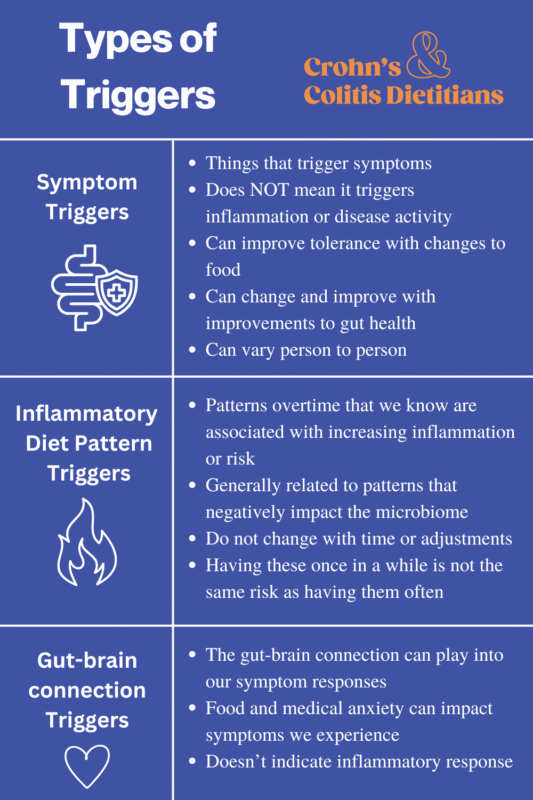
Defining Types of Food Triggers
This is one of the most important parts of the blog as it will help frame the rest of what you’ll read. One of the most misunderstood topics when it comes to food and nutrition for IBD food triggers.
If you’ve ever felt so confused about what you read online about what to stay away from or add more of with IBD – one of the reasons why it’s a confusing is that you hardly ever hear people define what a food trigger is and what remission means.
More importantly, even reputable blogs fail to define the different types of food triggers and types of remission. Personally, gaining an understanding of both completely changed my understanding of what was happening to my body and saved me from the a lot of mental stress.
Inflammatory Food Pattern Triggers
Inflammatory food patterns are as the name suggests things that have been identified in research to increase the risk of inflammation and disease activity in inflammatory bowel disease like Crohn’s and Colitis. These generally do not change from person to person and might not cause symptoms either. We have done extensive reviews on this on our YouTube so be sure to check it out.
- Myristic Acids – A diet that’s high in dairy fats, coconut oil, palm oil and saturated fats
- Alcohol – A diet that includes alcohol in the diet regularly or in high amounts
- Polysorbate 80, carboxymethylcellulose, carrageenan – These fillers specifically it’s best to avoid having reguarly
- Low diversity & fiber with high animal intake
This list is just a few considerations gathered from research over the last decade. For more – check out our YouTube on it.
Symptom Food Triggers
Symptom triggers can vary from person to person. Despite the common misconception, symptoms do not indicate that a particular food has caused a flare or inflammation. Symptoms do not an inflammatory flare either. See our blog on 4 types of remission for more on this. Or YouTube for a verbal breakdown.
Many people with IBD have little to none of the classic gut symptoms we see online and can eat a wide variety of things with no issues. However, many others may have symptoms that totally turn their world upside down. Often when there is colon involvement with the disease you’ll see more gut symptoms. However, IBD can vary a lot person to person.
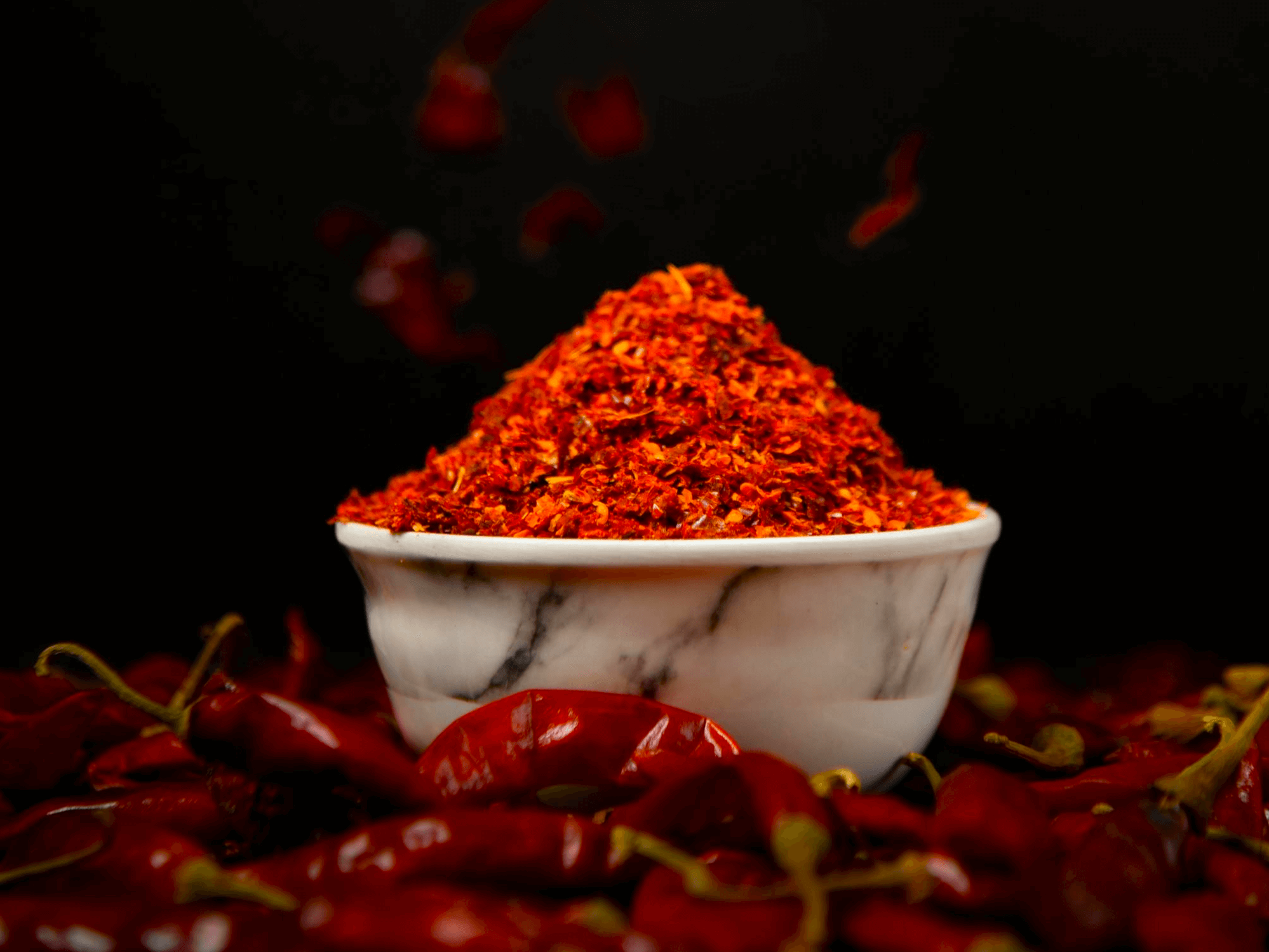
Ironically, many of the common foods that are IBD friendly and helpful for reducing inflammation are also symptom triggers for many like leafy greens, raw fruits and vegetables and nuts. For IBD friendly foods that trigger symptoms, the goal is to find modifications that improve tolerance overtime.
For tools on this check out our Flare Friendly Guide + Meal Plan and our Rainbow Challenge.
Gut-Brain Connection Triggers
The gut-brain connection can also impact our symptoms especially if you’ve had significant trauma or an obstruction during your IBD journey. For example, if you’ve had a food and experienced pain after or an obstruction, you might have significant fear with the food or may even avoid it all together.
Even in cases where the food itself didn’t cause the obstruction or pain directly, it can be hard to come back to a food that is now associated with significant pain. If you find yourself with significant food fears or medical trauma, consider seeing a therapist or GI psychologist. Seeing a IBD dietitian can also be helpful if you find yourself limited in safe foods.
A IBD dietitian can help you find ways to have a food in a way that lessens symptoms overall.
It’s important to understand that food triggers can vary depending on whether you’re currently experiencing a Crohn’s flare or if you’re in remission. This is why working with a registered dietitian who specializes in inflammatory bowel disease can be so valuable—we can help you navigate these changes and ensure you’re still getting adequate nutrition.
Can Certain Foods Trigger Crohn’s
While food doesn’t cause Crohn’s disease, what you eat can significantly impact your symptoms and either help prevent or provoke a disease flare. When it comes to inflammatory food patterns, finding swaps for foods and focusing on including more IBD friendly foods can be very helpful rather than focusing in only on what to avoid.
It’s important to remember that just because you experience symptoms with Crohn’s, doesn’t mean you are experiencing inflammation and your medications aren’t working. Medications may be addressing the inflammation, but they do not always address the symptoms. This is where working with an IBD dietitian can help.
When you eat foods that are symptom triggers you can experience increased abdominal pain, diarrhea, cramping, bloating, and other uncomfortable symptoms. However there are many modifications to food and ways of having symptom trigger foods that can greatly reduce or take away symptoms all together.
The mechanism behind symptom triggers vary. Some foods contain compounds that stimulate increased bowel movements or intestinal contractions which can be beneficial if you are experiencing constipation but not so great if you are someone experiencing diarrhea.
It’s also worth noting that some people may experience narrowed areas called strictures. When you eat high fiber foods or foods that don’t break down easily, they can get stuck in these narrowed areas, causing pain, bloating, and even intestinal blockages. This is why the foods you can tolerate often change depending on your disease activity.
In these cases, switching the type of fiber to more soluble varieties and blending or breaking down food further can help reduce the chance of complications. If you are experiencing strictures, it may also warrant the help of an IBD dietitian.
The good news is that by reducing inflammatory food patterns and identifying and adapting symptom triggers, many people with Crohn’s experience significant improvement in their symptoms. Current research also suggests that these types of dietary modifications can helpful in inducing remission, maintaining remission and can even help you stay in remission longer.
What Foods To Stay Away From with Crohn’s (or limit)
Red & Processed Meats
Red and especially processed meats were listed in the IOIBD guidelines as a food category to reduce intake of overall in the diet. Processed meats are anything that has been smoked or cured such as ham, bacon, hot dogs, sausage, pepperoni and even some sandwich meats.
Research has suggested that diets lower in red and processed meats are associated with longer periods of remission in Crohn’s patients. Minimizing these foods in favor of leaner proteins like fish or plant-based sources can help reduce the inflammatory load on the gut and support a healthier microbiome.
Many studies continue to find that follow are closer to a plant based and further from a meat focused western diet tend to have better outcomes when it comes to both symptoms and flare-ups.
Alternatives: Limiting red meat to once or twice a month or swapping it out for plant based options like Abbots or Actual Veggies can be a great way to reduce risk of flare ups. When it comes to processed meats, there is less flexibility with how much we can safely have without increasing risk of flare-ups so finding swaps and alternative options that you like would be better.
Myristic Acids from Dairy Fats, Coconut Oil & Palm Oil
One reason you may want to reduce dairy, particularly dairy fats, in the diet is that the saturated fat and myristic acids present in the diet have been associated with increased inflammation flare ups. Myristic acid linked is found in palm and coconut oil, dairy fat, and meat from grain-fed as opposed to grass-fed animals.
Although the data cited from the IOIBD guidelines on myristic acids focuses on Ulcerative colitis, myristic acids tend to not have a favorable impact on the gut microbiome which is why we also steer our Crohn’s patients away from high amounts in the diet.
Many people with Crohn’s disease find also find that dairy products worsen their symptoms, and there’s a good reason for this. A significant percentage of people with IBD are lactose intolerant, meaning they lack sufficient amounts of the enzyme lactase needed to digest lactose, the sugar found in milk and dairy products. When lactose isn’t properly digested, it can cause gas, bloating, cramping, and diarrhea—symptoms that overlap with and can intensify Crohn’s symptoms.
Alternatives: Focus on lowering dairy fats, coconut fats and palm oil in the diet and focus on avocado oils, olive oils and omega 3-rich sources of fats. Fortunately, there are also many dairy-free options available today. Plant-based alternatives like almond milk, oat milk and soy milk can replace regular milk in most recipes. Good Planet and some Kite Hill products have options without coconut oils added.
Additives Linked With Flares
Carboxymethylcellulose, Polysorbate 80, Carrageenan & Sulfites are the additives that continually show up in the literature as compounds we do not want to have a lot of in the diet especially with IBD.
If you find these on a label, you can typically find alternatives for quite easily that do not use these additives. Also for a longer discussion on the topic of additives – check out our YouTube on them HERE.
Alternatives: Scan labels for these ingredients and aim to find swaps or not have a lot of them in the diet.
Alcohol
Alcohol can be particularly harsh on the digestive system of people with Crohn’s disease. We did a whole YouTube on the topic recently that goes over what we know – check it out HERE.
In an survey of 2329 patients with IBD, alcohol consumption was identified as a potential trigger of worsening gastrointestinal symptoms. In fact, 75% reported its impact on gastrointestinal symptoms.
People often ask if there is a better type of alcohol to have, but all alcohol is generally the same. Beer, wine, and spirits can all trigger symptoms and can are associated with an increased risk of flare ups if consumed regularly. Additionally, alcohol can cause dehydration, which is already a concern for people with IBD.
Alternatives: If you are consuming alcohol, limit your exposure with it. Finding swaps like sparkling hops drinks can be a nice alternative. H2ops is a brand started by another Paul Tecker who also has Crohn’s.
Common Symptom Triggers
So far we have reviewed a list of Foods to Stay Away from with Crohn’s (or limit) specifically for their impact on the long term disease course and reducing overall risk.
However, below are a few of the common symptom triggers we see often. However, there is obviously so much more to the conversation!
Fried and High Fat Foods
Fat in itself is important with IBD, however the type of fats in the diet and the way a food is cooked does matter. Also, high fat diets can be a symptom trigger for many.
High-fat foods, especially those that are fried or greasy, can be challenging for anyone to digest, but they’re particularly problematic for people with Crohn’s disease. Fried foods, fatty cuts of meat, full-fat dairy products, and foods prepared with heavy oils or butter can slow down digestion and trigger symptoms. Fat is harder for your body to break down, and excess fat in your diet can lead to diarrhea, cramping, and bloating.
For people with Crohn’s disease affecting the small intestine, fat malabsorption is common, which means your body struggles to absorb dietary fats properly. This can result in fatty stools, increased bowel movements, and uncomfortable symptoms.
Alternatives: Baking, grilling, steaming, or poaching foods instead of frying them can make a significant difference. Use cooking methods that require minimal added fat. When you do use fats, choose small amounts of options like olive oil or avocado oil.
Sugar Alcohols, Coffee and Caffeinated Beverages
If you are someone who is having diarrhea, sugar alcohols and caffeine are important things to look into as both can increase bowel frequency.
Coffee and other caffeinated drinks can stimulate intestinal motility, meaning they speed up the movement of food through your digestive tract. For people with Crohn’s disease who already struggle with frequent bowel movements or diarrhea, this stimulant effect can make symptoms significantly worse.
Alternatives: If you enjoy a warm morning beverage, try herbal teas like chamomile, ginger, or peppermint (if you don’t have reflux issues). White tea and green tea contain less caffeine than coffee and may be better tolerated if you need a small amount of caffeine.
Treating Malnutrition in IBD is also a Priority
Despite the title “Foods to Stay Away from with Crohn’s” – It’s important to note that this whole journey with IBD and nutrition isn’t only about what foods you should stay away from. It’s equally important to put the focus on foods you should ADD more of! However, I am well aware of how hard this is when you are in a flare and operating with often little energy.
Many of us with IBD end up skipping meals to avoid triggering symptoms or unsure about where to turn when it comes to what to eat with IBD. Upwards of 50-75% of those of us with IBD end up malnourished at some point in our journey which can both increase symptoms as well as interfere with how well medications work for us.
Are you malnourished? Find out with our quiz HERE. Also, check out our free 1 hour training on What to Eat with IBD – HERE.
Moving Forward With Confidence
Hopefully this blog left you with an understanding of foods to stay away from with Crohn’s (or limit) and also an understanding of how much more there is to the conversation!
Managing Crohn’s disease through diet doesn’t mean you’ll never enjoy food again—it means becoming more mindful about how to eat in a way that aligns with you and improves your quality of life with Crohn’s. The relationship between food and inflammatory bowel disease is multi-faceted and highly individual, which is why we always emphasize the importance of personalized nutrition done alongside a IBD dietitian.
h many people use dietary tracking to try and figure out their triggers, this approach can be misleading when it comes to IBD when in a flare up. What usually ends up happening is that people take out too many foods unnecessarily. Instead of going this route, we suggest you get support from an IBD dietitian like us. If this isn’t an option for you, check out our YouTube channel for free trainings and our top rated Flare Friendly Guide + Meal Plan.
You deserve to feel supported, to have tools you can use to reduce symptoms, to enjoy your meals, and to live a full life despite your diagnosis. By understanding which foods to stay away from with Crohn’s (or swap) and making informed choices, you’re taking an important step toward managing your Crohn’s disease and preventing future flare-ups.
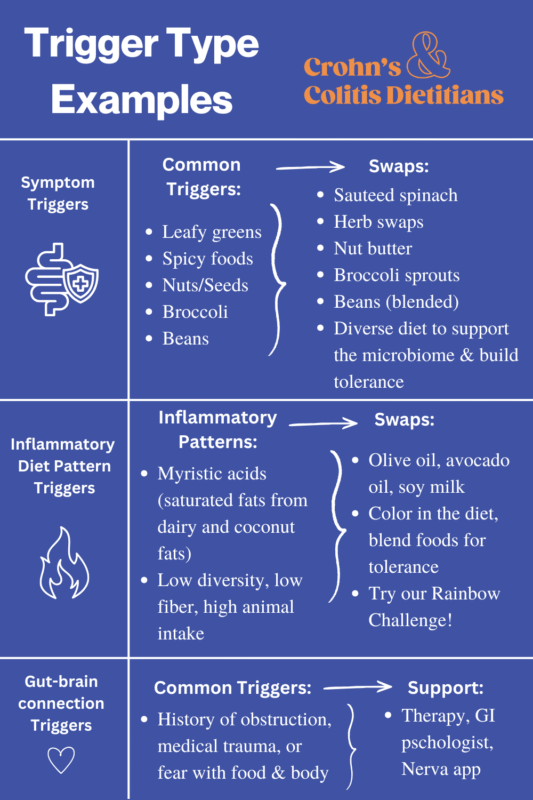
To wrap things up- below is a recap of potential swaps that can be made for each trigger type.
Did you like our blog- Foods to Stay Away from with Crohn’s? Let us know! Be sure to check out the resources shared.
Other blogs you might like:
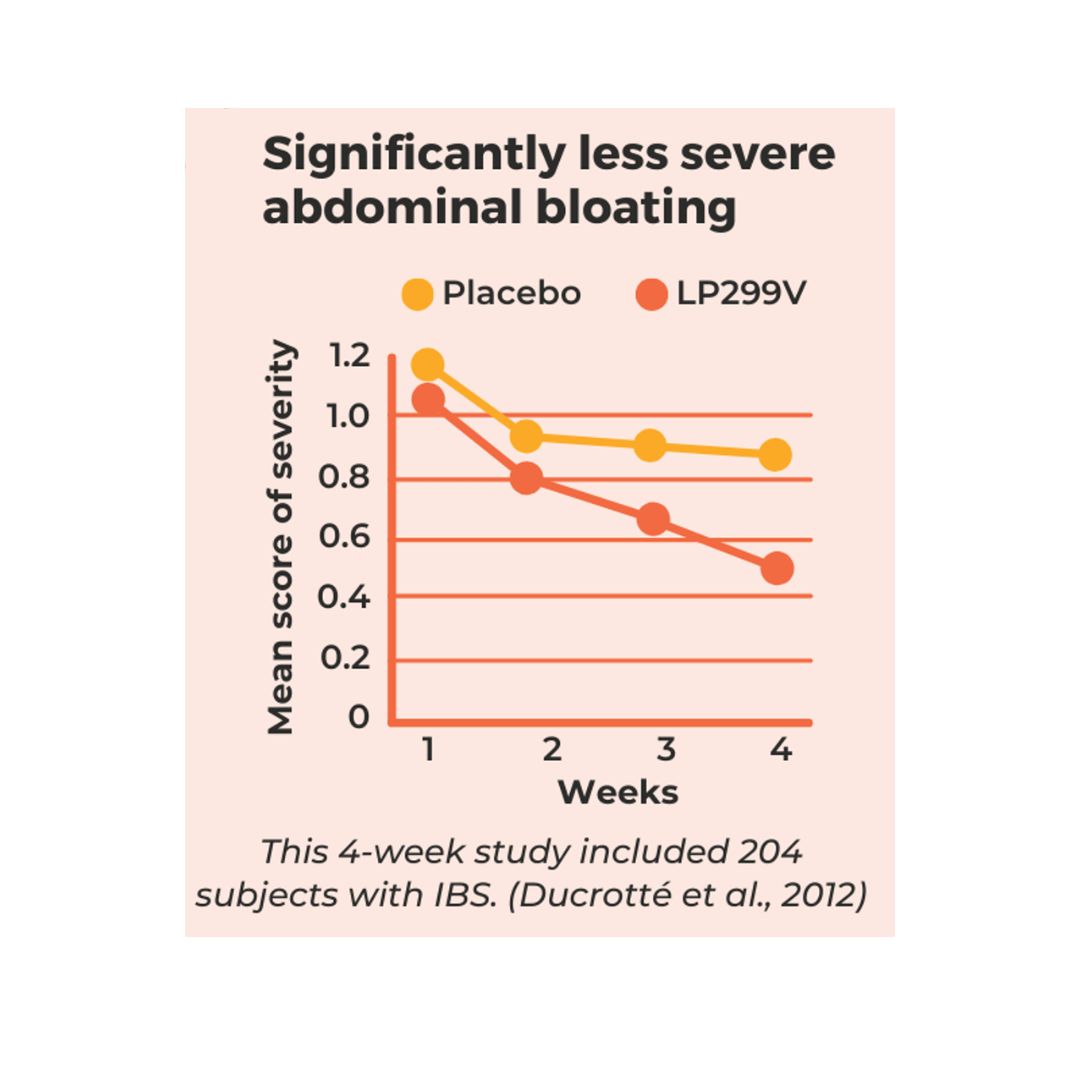
- Curious about if there is any evidence for probiotics for Crohn’s disease? Check out our blog titled best probiotics for Crohn’s Disease – although there are limited options (literally only 1 that has been researched with some good results) – we share what we do instead! We even share exceptions to this rule, such as overlapping IBS.
- If you enjoyed our blog on foods to stay away from with Crohn’s – you’ll likely also like Start Here for IBD Flares










0 Comments