
If you suffer from Inflammatory Bowel Disease, chances are you may have heard about the risk of developing a stricture and the problems it can cause. Before we look at what a stricture is, let’s share a couple of key facts which highlight this risk:
- Half of patients with Crohn’s Disease will have intestinal complications, such as strictures or fistulas, within 20 years of being diagnosed.
- Twenty-five percent of Crohn’s Disease patients have had at least one small bowel stricture, while 10% have had at least one colonic stricture which led to significant complications.
As you can see, a stricture can be a big deal. This is why it’s important to know what they are as well as what can (and cannot!) cause them.
Managing Fiber and Strictures in Your Diet
What is a stricture?
A stricture is an abnormal narrowing in the intestines that can lead to complications if left untreated.
While there is plenty of research about the effects of strictures, there is often confusion and misinformation about their cause. The biggest misconception is that fiber is to blame, which we’ll look at in more detail below.
It might also be useful to read our guide to fiber and Crohn’s. As you might see there can be a lot of cross-over when looking at conditions and the complications which can arise.
Strictures in IBD
Inflammatory Bowel Disease causes chronic inflammation of the gastrointestinal tract, therefore it goes without saying that strictures may form for those with IBD. Doctors can diagnose strictures using ultrasound, MRI, CT scans, or endoscopy. If a stricture causes a significant blockage or symptoms become unmanageable, surgery may be necessary.
What are the causes of strictures?
Strictures are usually caused by repeated cycles of continued inflammation and healing in the lining of the intestine, which causes scar tissue to form. The scar tissue begins to replace the normal cells over time, narrowing the gastrointestinal tract.
Can fiber cause a stricture?
Many people with IBD are incorrectly told to avoid fiber or follow a low-residue diet due to the biggest misconception about strictures, even though research does not support this recommendation.
Research shows people who avoid fiber are more likely to have flare-ups or develop complications like strictures. Not avoiding fiber is linked to a 40% lower risk of flare-ups, highlighting its benefits. Consuming whole grains reduces this risk too.
So why all this confusion around fiber, and where does the belief it causes strictures come from?
The confusion comes from Crohn’s guidelines, which advise avoiding high-fiber diets only for patients with existing strictures. As a result, some patients and doctors mistakenly think all people with IBD must avoid fiber, not just those with strictures.
The digestive system still needs fiber, which plays an important role. It can help reduce the risk of strictures and complications, plus helps create butyrate which reduces inflammation. Cutting fiber out of your diet can also increase the risk of developing other conditions.
2 Main Types of Fiber
Sometimes you may need to adjust fiber types to lower blockage risk and prevent flare-ups, but cutting fiber isn’t helpful.
What helps instead is knowing the two main fiber types, with one being safer for people with IBD:
- Insoluble Fibers – This type of fiber does not absorb water yet is important for removing things we don’t need in our digestive tract. Examples of insoluble fibers are the peels of fruit and vegetable plus Psyllium Husk (not Psyllium Peel- see below).
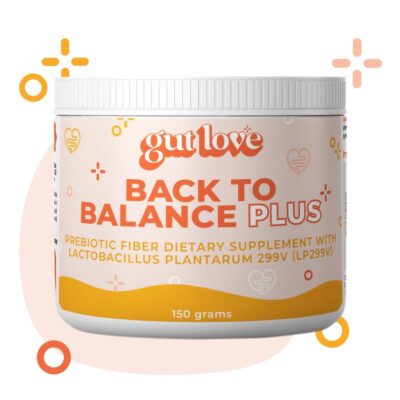
- Soluble Fibers – The safer choice! Soluble fibers completely dissolve in water, reducing the risk of strictures. Psyllium seed (not to be confused with Psyllium Husk) is a good example of a soluble fiber, with our prebiotic fiber product GutLove as another.
Just to recap here: Experts recommend that patients with IBD who have no risk of obstruction do not need to restrict dietary fiber.
Final Thoughts about Fiber and Strictures
Contrary to what you may read, fiber does not cause strictures. Therefore, people with IBD do not need to avoid fiber. Our bodies need fiber, and avoiding it altogether does not lead to better outcomes. In fact, low-fiber diets can raise colorectal cancer risk and may contribute to developing Crohn’s Disease or Ulcerative Colitis.
Get help with Crohn’s Disease and IBD
We know it’s confusing with so much conflicting information. One minute you hear to avoid fiber, the next that it’s healthy and okay to include.Our advice is to trust the experts and speak to a specialist if you still feel unsure. We are always here to answer any questions you might have.
If you’ve been avoiding or restricting fiber, and feel uncertain about how to add it back in, then you could look into supplements that can be helpful as you re-introduce fiber into your diet.
Our mission is to help you feel empowered and less confused about what to eat with IBD.
We provide evidence-based nutrition, backed by research, to make understanding your body and its needs easier.
If you’d like more personalized support and guidance then please don’t hesitate to contact us at Crohn’s and Colitis Dietitians.








As an article above, I am 75, 97 lbs and 5’1 tall. Had radiation to low abdomen secondary to endometrial cancer – 10 years post radiation developed chronic severe diarrhea, after much trial of meds was put on low dose hydrocodone – miracle – allowed me to work – leave the bathroom – but unable to drink alcohol at all – weighing my adult base wt at 150. In last 4 years began having periodic events of severe abdominal pain, bloating and random vomiting. Mostly after the 4th day I go to ER for fluids.d I’ve been worked up for Crohns, negative, worked up for parasites as I go to South America as a RN volunteer twice a year, negative, during the last 10years have had two cervical fusions, two lumbar fusions, the second neck surgery cause permanent difficulty swallowing. Have to turn head to right sometimes to clear and periodically choke, have to relax, not panic and cough till cleared. I am on pain management now with severe pain in neck, back , last back surgery surgeon nicked the spinal cord, developed arachnoiditis……I’m a mess, BUT I am still going, still have a pack of dogs and 20 birds. So for last 5 years NO ONE diagnosed me as radiation enteritis, usually just treat the dehydration, rule out a blockage and send me home……the episodes of vomiting now occur about every 3-4 weeks, have severe abdominal pain. I did some research for several months on all of this, ended up with the self diagnosis of radiation enteritis – went to Mayo Clinic and verified radiation enteritis, had a GOOD CT , not the junk they do locally here in a small town and diagnosed with a stricture just above the ileocecal valve. They are attempting dilation procedures. We assume there may be other stricture issues. I was told the possibility of surgery is strong, it will be difficult clearing all the scarring, adhesions, etc in bowel. MY Question, I seriously need to beef up my nutrition it is horrible, I am anemic, a lot of foods cause pain, some of the milky nutrition drinks seems to cause vomiting…..and I have a strong loss of taste, do you have suggestions for possible dietary choices. Currently I am surviving on a frozen sausage, egg and cheese biscuit a day and I try and drink a clear protein drink, why the biscuit does not cause problems , I don’t know .
I’m sorry you’ve been going through so much! While I can’t give advice in the comments of a blog, I’d be happy to chat with you about working with us to get advice on this. Feel free to set up a free call to discuss it!
I have an inflammatory upstream distal non fibrotic stricture. Dietitian said safe to eat The Perfect Bars but I think the little pieces are aggravating my gut and causing bloating. I don’t want to have surgery. I am 76 yrs old. Any suggestions of safe foods that will provide nutrition to gain weight? I weigh 90 lbs petite frame 5’1”. On prednisone taper and have had 2 IV loading doses of Tremfya. 3rd in a few days and then will be using injectable pen 200 every 4 weeks to hopefully address the stricture. I was on Entyvio for 7 years. I appreciate any info as the situation is scary and I’m getting mixed answers when I research and also ask physicians. Thank you.
Hmm… so much to think about with your question. I had 5 different questions running through my head as I read this. If you are open to it, we’d be happy to discuss some initial thoughts with you and talk about how we can help. You can set up an inquiry call below.
Schedule a Inquiry call to Work with us ⬇️
https://p.bttr.to/2VpevRX
I have adull hurt on my left side and around my back