Maybe you’ve recently received an Ulcerative colitis diagnosis or maybe you’ve had one for a while. Maybe you are wondering things like – what’s next for me?
A new diagnosis can feel like a lot. I remember when I was first diagnosed, the first few years I was still coming to terms with the new reality. Whatever brought you here – I’m glad you are here.
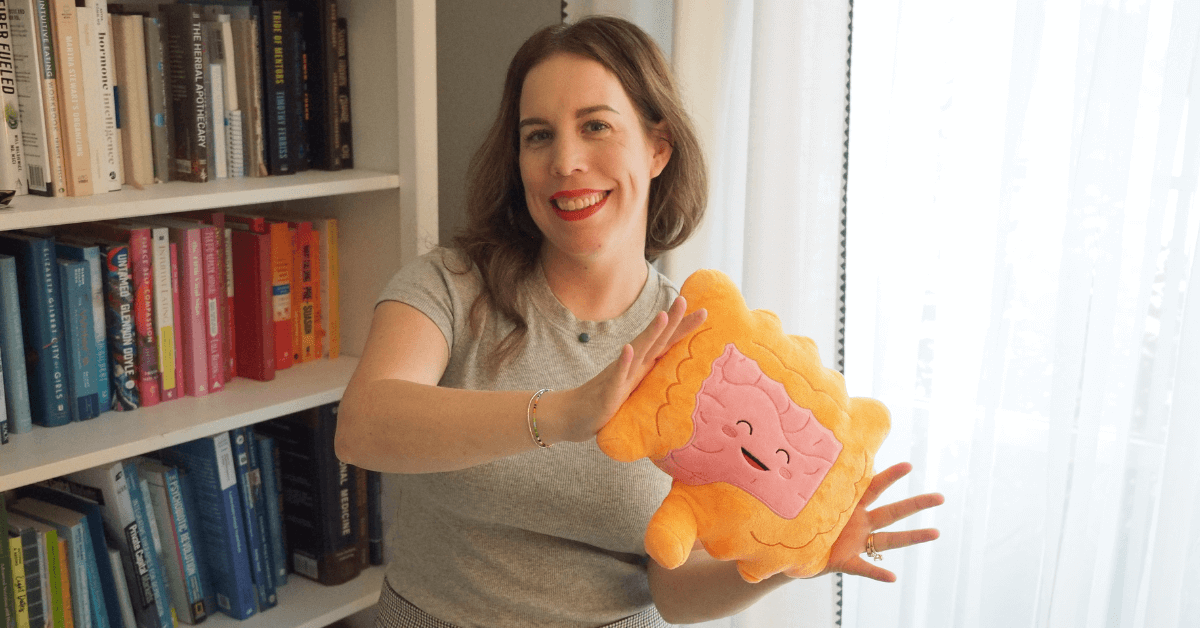
Let me introduce myself if we haven’t already met. My name is Ashley and I am the owner of The Crohn’s & Colitis Dietitians. I was diagnosed with Ulcerative colitis while in college as an athlete and nutrition student. It turned my world upside down, and I tried so hard to never talk about it or let it define me.
Purely out of self interest and a desire to feel better myself, I read a lot of research articles on pubmed. I even traveled abroad to observe other clinics that really helped patients like myself.
Flash forward to years later in private practice when I realized that my favorite patients to work with were those with IBD. I discovered my cousin had also been diagnosed and he encouraged me to not hide my diagnosis – he always saw it as a means to connection.
I started to open up and share on podcasts about my journey and I learned very quickly how helpful it was to others to know they weren’t alone. Ironically, it’s something that now I’m totally ok with being defined by!
I had thought opening up about it would be the worst thing for me but it actually added so much color to my life. I love the work I get to do everyday and the team I work with.
Ulcerative Colitis Diagnosis
The purpose of this blog is to help you feel less alone, more hopeful and to connect you with the best resources out there that I wish I had when I was first diagnosed. I’ll also give you some insights about where to even start when it comes to what matters the most.
Getting an ulcerative colitis diagnosis can often be a long road for many. Bowel diseases can often fly under the radar and diagnosing ulcerative colitis can be tricky in that it can get mistaken with IBS. This was definitely the case for me personally also which ultimately delayed my access to ulcerative colitis treatment.
My Story as a Dietitian & Athlete with Ulcerative Colitis
For some backstory, when I was diagnosed, I was an struggling student athlete. By struggling I mean that I was undiagnosed for a long time and experienced a lot of digestive pains, hospital stays and was regularly an easily injured athlete. I had no idea that it was anything chronic at the time and neither did my providers.
I was dealing with sometimes 20 or more bowel movements per day not knowing that I was dealing with a severe disease. Everytime I ran a complete blood count (cbc panel) and iron with my primary care – labs were off.
I went to several GI’s who said I didn’t “fit the picture” because I didn’t have weight loss. It wasn’t until as a nutrition student – in a Medical Nutrition Therapy class learning about Crohn’s and Colitis nutrition therapy that I started to push for more answers. Eventually I found a Gastroenterologist that understood the pain I was in.
At my colonoscopy I was in total disbelief at my diagnosis. Could it really be happening to me? Was it the right diagnosis? So much went through my head at the time.
When it finally settled in, it did all make sense. I suddenly felt validated. I was still a little scared- but also hopeful.
What to Do First When You Get an Ulcerative Colitis Diagnosis
When you first get a diagnosis of Ulcerative colitis you will likely have lots of questions. Make a list of all of your questions as they come up so that you can discuss them with your healthcare team. This will also help you feel less overwhelmed to have them all written down.
A new diagnosis can be a lot to take in, but take it one step at a time.
Don’t Skip Your Colonoscopies and Labs
Above everything else, this is quite possibly the most important when it comes to your future with an Ulcerative colitis diagnosis. Here’s the thing – colonoscopies and lab testing is the only true way to measure disease activity, inflammation and remission.
Don’t fall into the trap of thinking that you can rely on how you feel and symptoms alone. Symptoms only tell us part of the story. Your Gastroenterologist will often do blood tests to check inflammation markers like fecal calprotectin, C-reactive protein, erythrocyte sedimentation rate and Lactoferrin and do colonoscopies and/or endoscopies to check on how well you are responding to treatments.
Outside of regular colonoscopies and lab work, sometimes magnetic resonance imaging (MRI) might be used to check for secondary conditions that we are at increased risk for like primary sclerosing cholangitis. Regular colonoscopy screenings are also currently the only tool with IBD to truly detect and prevent colon cancer.
So the bottom line – don’t skip your regular check ups with your gastroenterologist- even if you feel better!
Ask for Nutrition Related Labs Regularly
Nutrition related labs are so important when you’ve been given an Ulcerative colitis diagnosis. There is a lot of data to back this up – check our resources page for more information and download our document called Why Nutrition Matters – Resources to Share with Your Healthcare Team can be found on our Resources page.
Nutrients commonly get low with IBD due to absorption issues and ongoing inflammation. But we also know how important they are for helping to regulate inflammation, supporting overall gut health, energy reserves and so much more.
Check nutrients like vitamin D, Iron & Ferritin, Zinc and B12 to start. If you need a more thorough assessment, we can run these labs in our virtual clinic for you and provide an extensive look at where your nutrients stand. We like to also look at the storage of nutrients as well as how they are utilized.
Skip the Forums – Get An Inflammatory Bowel Disease Dietitian
We hear from so many newly diagnosed people that say – I wish I found you sooner. It seems like so many of us at some point end up on forums, google, facebook, pubmed and even reddit trying to DIY nutrition from what others with IBD have done.
Your Gastroenterologist is the one that will diagnose ulcerative colitis and suggest initial treatments. As the first point of contact, they are also often the first place people often go to figure out what to eat and how to navigate their nutrition with Ulcerative colitis. However, most healthcare professionals and gastroenterologists do not have the time or nutrition education properly guide someone with UC – this is really more of the role of a licensed dietitian.
A dietitian specialized in Ulcerative colitis is better equipped to help you through providing medical nutrition therapy which is nutrition guidance for the treatment of disease. Whether you’ve got mild or severe ulcerative colitis, a IBD focused dietitian can help you better navigate reducing symptoms, decreasing risk of flare ups and helping induce clinical remission.
To save you the time, money and stress – consider reaching out to an IBD focused dietitian. In our clinic over the last 11 years we have helped thousands of people through webinars, e-books and in one-on-one sessions over find relief and feel more at ease and confident in their nutrition path.
If you are looking to add an IBD dietitian (like us) to your health care team feel free to reach out. We can help you sort through conflicting information and find what’s most relevant to you. We will help take the stress off of you and help you find what’s most important for symptom reduction and getting to remission.
You can read about our offers and even set up a free no strings attached call to discuss it with us personally.
You Don’t Have to Track Everything to Find Your Triggers
You might be surprised to learn that we do not ask our patients to start tracking everything they eat to find their triggers. Trying to find your triggers by what triggers symptoms can be so misleading. Especially because many IBD friendly foods that help reduce inflammation and disease activity may actually trigger symptoms.
If you want to learn more about the differences between triggering inflammation/disease activity and triggering symptoms – check out our blog on the 4 types of remission. In the blog we discuss biochemical remission, clinical remission, endoscopic and histological remission.
We like to start off with our patients by focusing on adding more IBD friendly foods and helping them find modifications to reduce symptoms.
Get Connected to Community
Feeling connected and supported when you are diagnosed is so helpful as you process your Ulcerative colitis diagnosis. People often mention feeling isolated after there diagnosis, so this is a great time to be proactive in getting connected.
One great way to get support is going to therapy. There are also many therapists now that specialize in helping those dealing with digestive conditions. Some even have their own IBD focused support groups.
The Crohn’s & Colitis Foundation also has support groups that are totally free. CCFA also holds many events where you can get connected to others with IBD and those in the community that are allies and advocates for those with IBD.
Top Resources for an Ulcerative Colitis Diagnosis
If you’ve gotten an Ulcerative Colitis Diagnosis, you might have gone to the internet to find resources to learn more about Ulcerative Colitis and especially around What to Eat for IBD. However, it’s no surprise that the internet can be a confusing place especially when it comes to nutrition information.
Everything seems to be so conflicting – and it’s becoming harder to sort through it all to find evidence backed information that’s actually exploring the nuances of IBD and the individual “lived” experience of IBD. An example of this, many patients are told “just eat what you can tolerate” – but what if you feel like you can’t tolerate anything?
When you are actually the one living with the pain of IBD and the fear of triggering more pain – this sort of cookie cutter advice just doesn’t cut it! Eating minimally and barley enough isn’t sustainable. Plus we know how this can lead to malnutrition and stand in the way of IBD patients getting to remission.
Top Resources for an Ulcerative Colitis Diagnosis
We have created lots of great resources over the last decade. Resources that we all 3 wish we had when we were diagnosed with IBD. Below I’ll list our top rated resources. These are all things we have received the most positive feedback about from those that have used them.
Malnutrition Resources for Ulcerative Colitis
Malnutrition impacts upwards of 50% of those with Ulcerative colitis, and we know this can impact how well someone responds to medications and their ability to get to remission. Malnutrition is simply a mismatch of what your body needs and what is taken in when it comes to macronutrients like carbohydrates, protein and fat and micronutrients like vitamins and minerals.
It’s very common in IBD, especially in flares where the body’s needs go up and intake often goes down.
- The Biggest Nutrition Reason You May be Stuck + What to Do
- Malnutrition Quiz + Handout
- Vitamin B12 Deficiency in IBD
- Vitamin D in Inflammatory Bowel Disease
The links above are our top resources on Malnutrition and what to do about it- although you can find many more on our blog, youtube and instagram.
What to Eat with Ulcerative Colitis without Triggering Symptoms
The biggest question we get when people reach out to us is “what can I eat with ulcerative colitis”. It’s an important question – and also one that doesn’t get fully addressed often online.
When people ask what to eat with an Ulcerative colitis diagnosis – they are also asking – how do I eat in a way that reduces my ulcerative colitis symptoms? And also how can I reduce risk of flare ups? And most importantly – what’s really going to be the most effective?
Don’t worry, we got you covered! Of course working one on one with a dietitian specialized in ulcerative colitis and IBD is the best way to get customized to you advice. However, we have distilled some of our best information below that’s as close as you can get customized advice short of working with us.
- The Top Rated Flare Guide + Flare Friendly Meal Plan
- What to Eat with IBD (without triggering symptoms) – 2025 update
- What to Eat with Ulcerative Colitis – Plus UC Food List
- Low Sulfur Diets in Ulcerative Colitis – New Study + Next Steps
Final thoughts
There is so much hope too for the future. Every year when we go to conferences and see all of the brand new research in nutrition and new treatments coming out – it’s a reminder that we really are advancing and taking giant leap towards creating a better future for those with Ulcerative colitis.
Inflammatory bowel diseases like Ulcerative colitis can be tough and a new diagnosis can sometimes feel overwhelming. Please know that you are not alone, there are many people that understand what you are going through and want to help.









0 Comments