

One of the things we find ourselves saying all the time to our patients that has now become our motto is – “Go Low & Go Slow”.
When it comes to making changes with diet and especially diet expansion, starting off with small portions and adding new things slowly is key to reducing symptoms with new foods.
As someone who has never identified with being patient with anything, I’ve found myself many times struggling often with trying new things. That being said, I’ll let you into a few tips as a IBD patient & dietitian.
Symptoms can come about for many reasons including fat malabsorption, issues with certain carbohydrate types and even food timing can play a role in increasing symptoms.
Fiber is incredibly important for the microbiome and reducing risk of flare ups as well as colon cancer. Fiber also helps our gut bacteria produce more short chain fatty acids (SCFA’s) which help with repairing the gut lining.
When we consume fiber, our gut bacteria ferment the foods we eat in the process of creating SCFA’s which can also create gas and symptoms which are harmless and more of a sign that your gut bugs are healthy.
However, the amount of symptoms present can also become too uncomfortable at times especially for those with sensitive guts like those with IBD.
How to Relieve Symptoms of Too Much Fiber
Fiber plays a vital role in supporting digestive health and regulating bowel movements. However, consuming excessive amounts of fiber too quickly can lead to uncomfortable symptoms that may adversely affect your daily life.
As I mentioned, in our practice we have come up with a phrase we use often when it comes to fiber. We often advise our patients to “go low and slow”. This helps your gut adapt slowly and is less likely to cause symptoms too.
Similiar to the time and consistency it takes at the gym to build a muscle, your gut microbiome also takes time, consistency and slowly building up.
Yes, believe it or not you can actually build up tolerance to fiber and gut friendly foods.
Fiber training and diet expansion is one of the things we help our patients with to build tolerance, reduce trigger foods and ultimately reduce their risk of flare ups and inflammation! It is the key to success when it comes to helping people reduce the chance of getting caught in a cycle of flares.
This comprehensive post aims to provide you with an in-depth understanding of fiber and its functions in the body.
In this post, we’ll guide you through the types of fiber, recommended daily intake, potential health benefits, and drawbacks of consuming excessive amounts.
Furthermore, we’ll delve into the common symptoms associated with high-fiber intake, such as bloating, gas, abdominal pain, and constipation.
Lastly, we’ll provide a few practical tips on how to alleviate these symptoms.
What Is Fiber & How Much Fiber Should You Have A Day
Dietary fiber, often referred to simply as “fiber,” is a type of carbohydrate found in plant-based foods that the body cannot digest. It plays a crucial role in maintaining healthy digestion, promoting regular bowel movements, and contributing to overall well-being. There are two primary types of fiber: soluble and insoluble.
- Soluble fiber dissolves in water, forming a gel-like substance that aids in lowering cholesterol levels, stabilizing blood sugar, and promoting feelings of fullness. Sources of soluble fiber include oats, beans, legumes, and fruits like apples and citrus.
- Insoluble fiber does not dissolve in water, helping to add bulk to stools and promote bowel regularity. Whole grains, wheat bran, nuts, and many vegetables are rich sources of insoluble fiber.
Have you ever wondered how much daily fiber intake do we actually need? The recommended daily intake of fiber varies according to age and gender. Generally, adult men should aim for at least 38 grams of fiber per day, while adult women should consume a minimum of 25 grams per day.
Children require less fiber, with recommendations ranging from 14 to 31 grams per day. However, individual needs may differ, so it’s essential to consult a healthcare professional or registered dietitian for personalized advice.
How Much Fiber Is Too Much Fiber
Consuming too much fiber to fast can be problematic if you aren’t drinking enough water to help it move through appropriately. So be sure to “go low and slow” and ease into it!
Most people don’t get enough fiber overall. Especially those with IBD! So unless you are eating multiple servings of high fiber foods like lentils, you don’t have to stress over going too high on fiber. Just focus on slowly introducing it.
Eating a high-fiber diet exceeding your body’s tolerable limit can result in several uncomfortable symptoms.
These may include bloating, abdominal pain, gas, constipation, diarrhea, and reduced nutrient absorption. Gradually increasing your fiber intake and drinking adequate fluids can help minimize these side effects, allowing your body to adjust to the higher fiber intake over time.
To find the optimal amount of fiber for your specific needs, it’s crucial to listen to your body and monitor your symptoms. Consulting with a healthcare professional or registered dietitian can provide personalized guidance on how to incorporate the appropriate amount of fiber into your diet while avoiding potential discomfort or health issues.
What Happens If You Eat Too Much Fiber
While fiber in itself isn’t necessarily the problem, eating too much fiber too quickly or not consuming enough water with increased fiber can lead to symptoms.
Constipation or Diarrhea
With a sudden increase of fiber and lack of fluid change, it’s common to experience some abdominal pain and constipation since there isn’t enough fluid to move dense fibers through.
If you are someone that also has stictures present, you may need to work with a dietitian to figure out modifications with fiber to help prevent an obstruction.
However, you may also see diarrhea present when there is a higher amount of fiber present than you are used to. This can lead to your gut cells increasing peristalsis and moving the fiber through very quickly, resulting in diarrhea.
Bloating and Abdominal Pain
Bloating and abdominal pain are common when you increase fiber too quickly. In addition, bloating can occur when there is constipation present, leading to a feeling of fullness and or having visible distension of the belly.
Another reason for bloating and abdominal pain with a sudden increase in fiber is that as fiber ferments in the gut, it can create gasses that result in a physical feeling of fullness as well. Some people describe bloating as their stomach sticking out or feeling “3 months pregnant”.
How to Relieve Symptoms of Too Much Fiber When You Have Crohn’s or Colitis
If you feel that you might have had too much fiber too quickly with Crohn’s or Colitis, know that it will pass and there are things you can do to reduce your symptoms. Going “low and slow” with fiber introduction is key to reducing symptoms overall, but here are some other specific tips.
Can We Help? Get in Touch:
Constipation and Diarrhea
To prevent constipation with fiber, make sure that you are drinking adequate fluids to help move fibers through. If you have been slowly introducing fiber and are drinking enough overall but still constipated, reach out to your dietitian to dig deeper.
Sometimes nutrients like magnesium which helps your muscles relax (including your gut muscle) can be low and might be driving constipation.
If you are dealing with more diarrhea symptoms, we usually encourage our patients to start with more soluble fibers that absorb water and slow down transit time a bit.
Changing the type of fibers being used can also be helpful. Working with an IBD focused dietitian can help you identify better how to adjust fiber type and quantity.
Bloating and Abdominal pain
The easiest way to ease bloating and abdominal pain related to fast fiber increases is to slow down on the fiber. But once it’s already happening, herbs like cardamon, chamomile and ginger can be helpful in reducing gases and bloating.
Laying on your left side, yoga moves like childs pose, going on a walk and soaking in a hot bath are other non-food ways you can address bloating and abdominal pain that are actually effective too!
Tools We Use To Reduce Symptoms of Too Much Fiber
When people are actively dealing with symptoms – we often recommend carminative herbs like ginger tea, chamomile and peppermint tea to help with bloating and gut discomfort. Going on an after meal walk can also help with moving through the discomforts of going too fast with fiber.
If you aren’t much of a tea drinker, some of our patients like products like IBguard.
We also recommend diaphramatic breathing and laying on your left side to help with lessening symptoms.
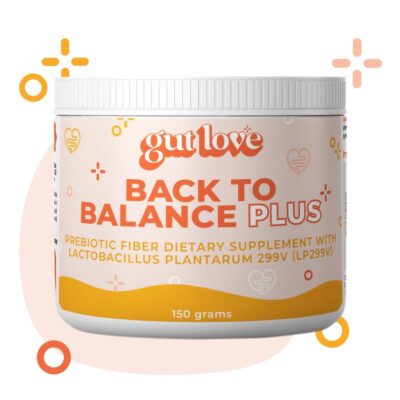
Did you know we actually use certain prebiotic fibers to help reduce symptoms? One of the tools we use often for helping to normalize stool pattern, reduce bloating and abdominal pain is a product we created called Back to Balance Plus.
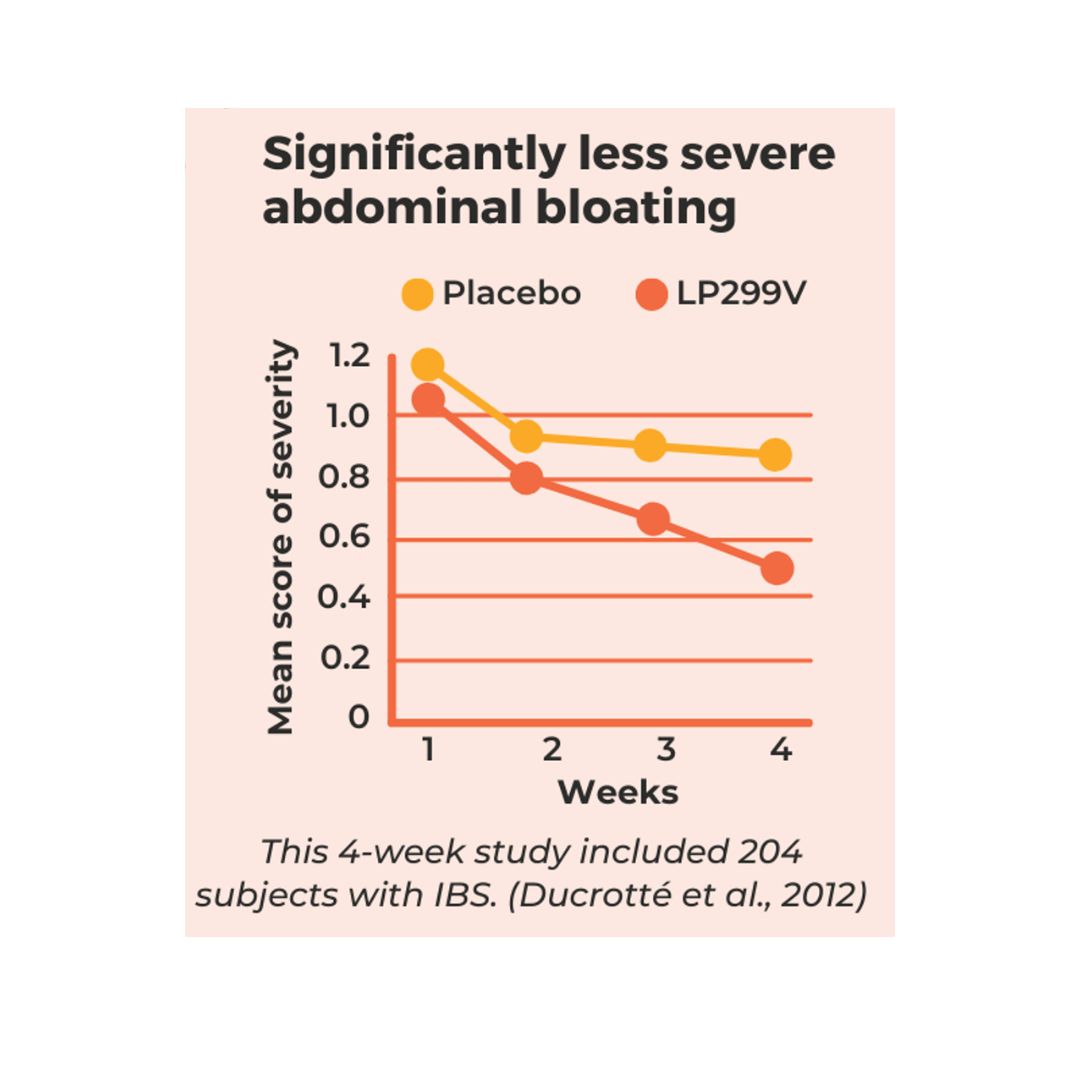
Plus it’s 100% soluble in water, tasteless and easy to use. It contains only two ingredients – sunfiber and lactobacillus plantarum 299v which have evidence to show that they help with reducing diarrhea, constipation, bloating and abdominal pain at 4-6 weeks of use. The research is listed on the website.
We have recently been selling out of it faster than anticipated, so if it’s not available, get on the wait list to grab one.
Important Takeaways
If you are curious about myths and truths about fiber and IBD, check out our most popular fiber blog, Fiber and IBD. Another good read is- Symptoms of Not Enough Fiber.
Be sure to not increase fiber intake too quickly. Adopt our motto “low and slow”.
Your digestive system loves fiber and your gut bacteria consume fiber rich foods and reward us with short chain fatty acids (SCFA’s) that have many benefits including inflammation reduction.
Another added benefit to getting the recommended 30 grams of fiber per day in the diet is that it reduces the risk of colon cancer.
Remember that all fiber is different!
In this article we discussed soluble and insoluble fibers, but there are many other considerations and qualities of fibers to be considered when it comes to using fibers to help our patients reduce symptoms.
For example, in our practice we often use lots of soluble fibers that can soak up excess water in our patients that have diarrhea. These fibers also form a gel like substance that also has benefits to the digestive tract.
If you are someone with IBD, it’s very likely that you may benefit from an increase in your fiber intake as those of us with IBD tend to be too low in fiber and often low in fruits and vegetables. However, you might need help tolerating fiber or knowing how to use it in a way that can help you decrease your symptoms. Consider working with an IBD dietitian that can help you with this – like us!
Remember, you don’t need a high fiber diet to reap the benefits. Just getting up to the recommended 30 grams of fiber can be beneficial for people. It will likely also increase the amount of diverse plant foods in the diet which we know is incredibly beneficial for gut health.
Other resources you’ll love:
Irritable bowel syndrome IBS vs IBD
https://crohnsandcolitisdietitians.com/is-ibs-and-ibd-the-same/











I’m not officially dx with IBD, but definitely have slow motility most likely due to Opi Induced Constipation /chronic, intractable pain.
I’ve been using a premade smoothie product that uses plant based PrEbiotic fiber made with fruits w/bananas listed first. (Noka Superfood Smoothies)
It’s difficult to eat hard foods due to the pain, so I have a few of these a day. I drink a few bottles of water daily, though probably not enough. I’m also sedentary due to pain.
I’ve been having significant lower abdominal and back pain with constipation (1-2x/week, usually only after MOMg).
I’m trying to figure out what is causing the pain and if it might be the Noka product. It has 1.4mg of iron and 280mg of potassium. I also use Dr. Berg’s electrolytes which have 1000mg of potassium.
I recently started low dose progesterone and testosterone creams in addition to the estradiol patch.
Thank you.
I have Chrohn’s, Behcet’s, NAFL, and really high cholesterol and apparently really need to increase phytonutrients and fiber, but gut motility imaging the barium went through from mouth to start of large intestines in 20 minutes, and veggies come out in recognizable unprocessed chunks (also have several missing teeth). Also have had a number of small bowel resections and severe malabsorption. Any way like cooking or pureeing to keep micronutrients in vegetables but that would get absorbed better and less painful? Also where can I find list of what micronutrients and phytonutrients are in fruits, grains, veggies to get most bang for my (painful) buck?
Hey Tina! I’m sorry to hear you’ve been struggling a lot. That’s a lot to manage on your own. Hope you have a good supportive team to guide you. Cooking and pureeing are a great start when it comes to helping with the tolerance factor.
I can hear the pain coming through in your comment – if you don’t have support via a GI/IBD dietitian, I would start there. Especially considering the resections and severe malabsorption. To be honest, I don’t think you’ll be able to get what you truly need through just food. You might need supplementation if you are low. And truly a dietitian should be managing that with you. It will really help with decreasing the stress of it all too to offload some of this to someone that’s seen it before.
Feel free to set up a call and we can discuss it further. If we have openings we are happy to help or we can also refer you to someone.
Call: https://bit.ly/4anBnGq
my problem is I have been eating oats meal flax seeds chia seeds sesame seeds,sunflower seeds every morning I am 65 years old male now I am experiencing this difficult to pass stools lazy bowel movements I have cut the intake if this for a week I am drinking water I have stopped eating veggies like spinach,legumes because of this problem
There are modifications you could look at doing to reduce symptoms also! A lot of people find if the seeds are ground up there is less symptoms.